Archives
- 2026-10
- 2026-09
- 2026-08
- 2026-07
- 2026-06
- 2026-05
- 2026-04
- 2026-03
- 2026-02
- 2026-01
- 2025-12
- 2025-11
- 2025-10
- 2025-09
- 2025-03
- 2025-02
- 2025-01
- 2024-12
- 2024-11
- 2024-10
- 2024-09
- 2024-08
- 2024-07
- 2024-06
- 2024-05
- 2024-04
- 2024-03
- 2024-02
- 2024-01
- 2023-12
- 2023-11
- 2023-10
- 2023-09
- 2023-08
- 2023-07
- 2023-06
- 2023-05
- 2023-04
- 2023-03
- 2023-02
- 2023-01
- 2022-12
- 2022-11
- 2022-10
- 2022-09
- 2022-08
- 2022-07
- 2022-06
- 2022-05
- 2022-04
- 2022-03
- 2022-02
- 2022-01
br Perspectives and challenges Previously the main focus
2024-10-12
Perspectives and challenges Previously, the main focus of development of adenosine targets for pain was on A1Rs, due to prominent antinociception in multiple preclinical models and preliminary observations in human trials. However, delivery of agonists can be limited by other (e.g. cardiovascular
br Funding br Introduction l Dihydroxyphenylalanine l DOPA i
2024-10-12
Funding Introduction l-3,4-Dihydroxyphenylalanine (l-DOPA) is the gold-standard treatment for the motor symptoms of Parkinson's disease (PD); however, its chronic use induces severe motor complications that eventually limit its long-term efficacy (Bastide et al., 2015). The most disabling side
Normally the activity of the lyase increases with the
2024-10-12

Normally, the activity of the 17,20-lyase increases with the onset of adrenarche [7], [8], [15]. Adrenarche has previously been perceived as a relatively sudden event, occurring physiologically between 6 and 8years of age. However, results from our laboratory clearly indicated that adrenarche is a c
As in humans and other mammalians spontaneous
2024-10-12
As in humans and other mammalians spontaneous activity of sinoatrial pacemaker Tofacitinib Citrate in in the zebrafish heart crucially depends on proper HCN4 channel activity (If) and spontaneous diastolic depolarization [15,81]. Whether Na+/K+-ATPase currents regulate next to phase of myocardial r
br Aromatase inhibitors The aromatase enzyme P arom
2024-10-12
Aromatase inhibitors The aromatase enzyme, P450arom, belongs to the super-family of P450 proteins which includes more than 480 members divided in 74 different families. P450arom is a unique member of family 19 [39], and is located in the endoplasmic reticulum of mammalian GDC-0152 that express t
In receptor binding terminology both receptor and acceptor c
2024-10-11
In receptor binding terminology, both receptor and acceptor contain a receptive site for the ligand, although only the receptor induces a biological function. Moreover, the acceptor lacks an endogenous ligand. Many proteins have been described as receptors for toxic Aβ assemblies, implying a designe
br Author contributions br Financial disclosures
2024-10-11
Author contributions Financial disclosures Acknowledgements We thank Ms. Eva So for the editorial assistance. This work was supported by grants from the National Natural Science Foundation of China (No. 81622015, 81571042 and 81501143) and the National Basic Research Program of China (No. 2
A unique finding in this study is that
2024-10-11
A unique finding in this study is that 12/15-LO influences CREB phosphorylation in the murine brain. While previous reports have found that knockout of 5-lipoxygenase, a related enzyme that also uses arachidonic Estradiol 17-(β-D-Glucuronide) sodium salt for substrate, can regulate CREB phosphoryati
br Discussion Herein we demonstrate that mice deficient
2024-10-11
Discussion Herein, we demonstrate that mice deficient in L-12/15 LO are more sensitive to 3-NP-induced toxicity although a substantial individual variability in striatal lesion size in response to 3-NP in both genotypes was observed. This variability is not atypical; several studies demonstrate s
br Potential and established risk
2024-10-11
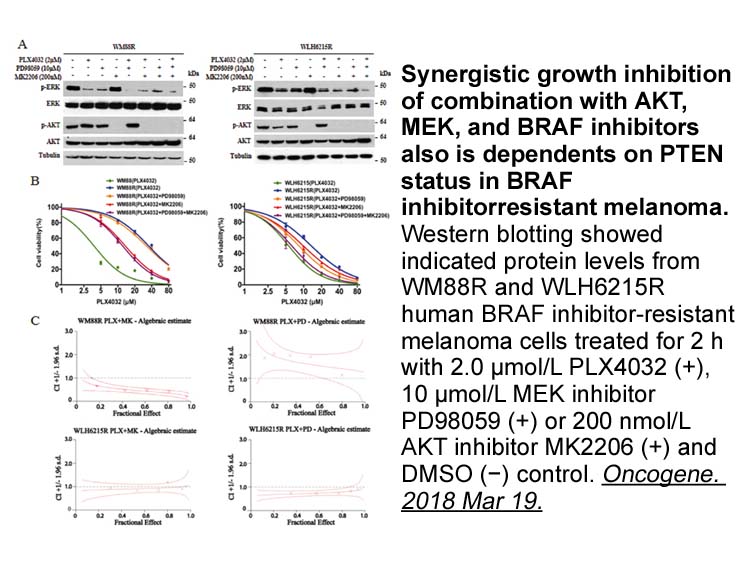
Potential and established risk factor for Alzheimer’s Disease The only way to overcome the above mentioned limitations is the identification of risk factors, which, taken together, can reliable predict the development of AD. Age and ApoE4 are established non-modifiable risk factors for AD. The ri
ion channels Notably AR and AR signaling
2024-10-11

Notably, β2AR and β3AR signaling can also occur via mechanisms independent from G protein [13]. Additionally, the response to GPCR stimulus can be modified by various parameters, including chronic stimulation, cell hypoxia, acidosis, and aging [14], [15], [16]. GRKs have a significant role in the r
Obesity is defined as a body
2024-10-11
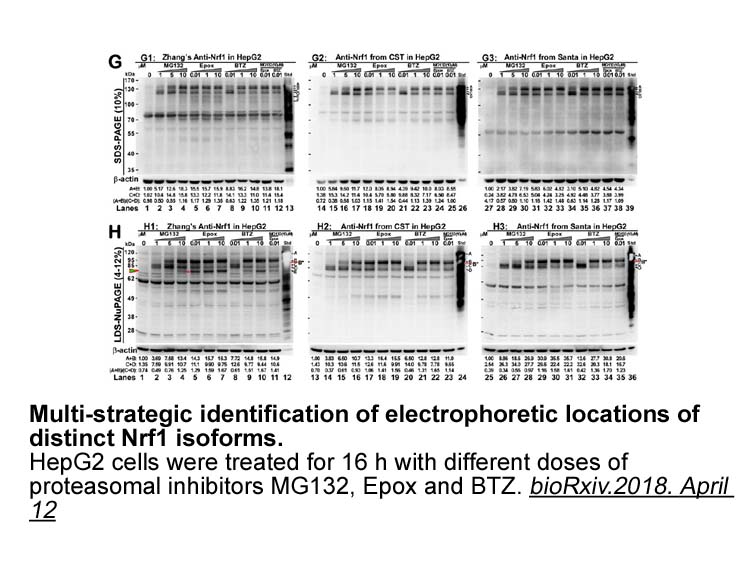
Obesity is defined as a body mass index (BMI) of 30kg/m2 or higher and is known to have a very close association with the risk of developing cancers (Hsueh and Deng, 2016). Several theories exist as to how this link is defined with respect to various cancers, one of which involves the effect of obes
In this study in an effort to explore the
2024-10-11
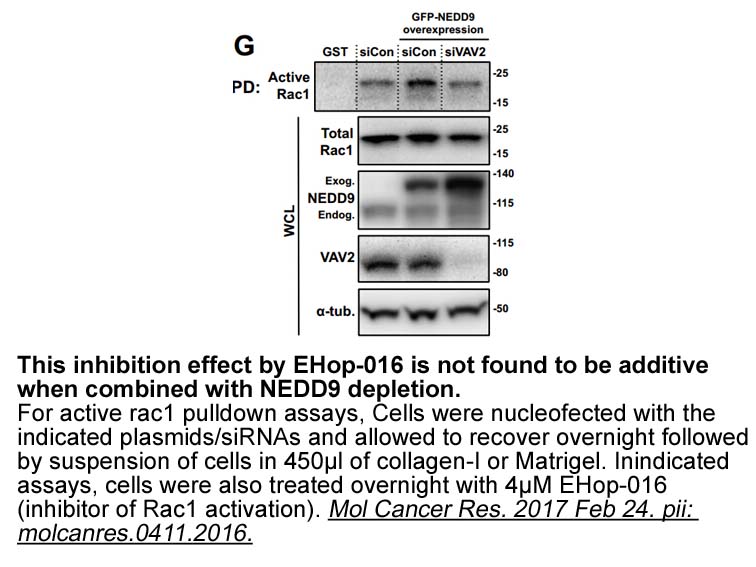
In this study, in an effort to explore the possible role of 5-HT6 receptors in mediating the memory-enhancing effects of YL-0919, we first assessed the memory-enhancing effects of YL-0919 in the Morris water maze, object recognition test and step-down passive avoidance task. In addition, we then inv
The central problem in amnesia developing following impairme
2024-10-11
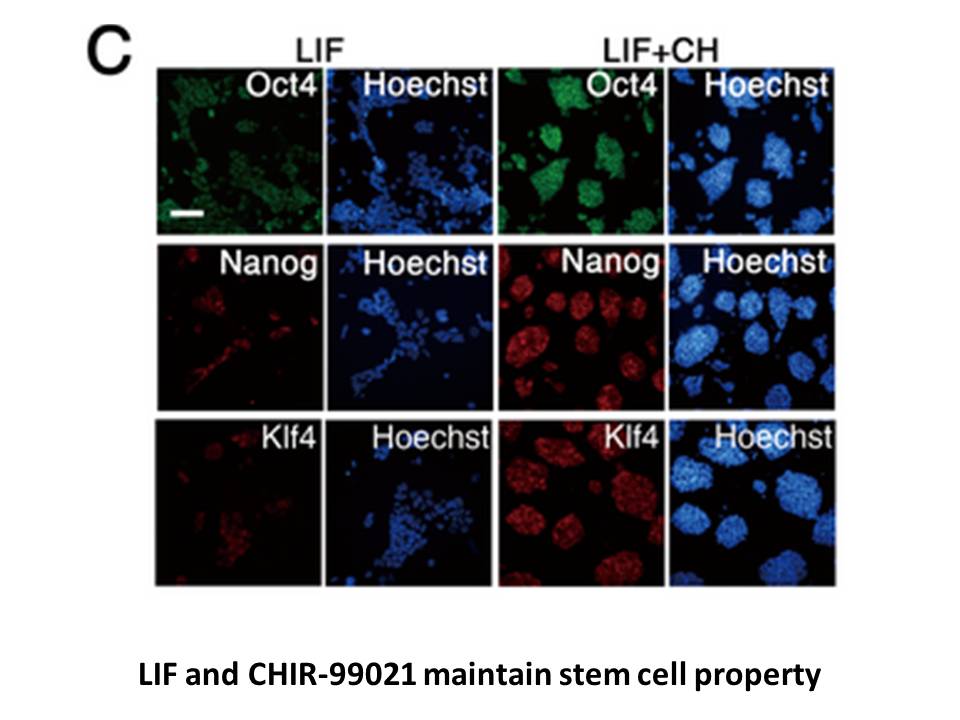
The central problem in amnesia developing following impairment of long-term memory consolidation or reconsolidation is a question of the underlying mechanisms, whether it is caused by impairment of retrieval or memory storage mechanisms [3,8,9,[15], [16], [17], [18]]. To answer this question, severa
The fact that the BPloopAsn regains its
2024-10-11
The fact that the α1-BPloopAsn141 regains its α-Btx binding with a Kd similar to that of the wild type α1 ECD [18], suggests that the AChBP Cys-loop does not interfere with the correct conformation of the mutant ECD. Data from analogous mutants of the human neuronal α7 subunit ECD showed improved li
8631 records 107/576 page Previous Next First page 上5页 106107108109110 下5页 Last page