Archives
- 2026-06
- 2026-05
- 2026-04
- 2026-03
- 2026-02
- 2026-01
- 2025-12
- 2025-11
- 2025-10
- 2025-09
- 2025-03
- 2025-02
- 2025-01
- 2024-12
- 2024-11
- 2024-10
- 2024-09
- 2024-08
- 2024-07
- 2024-06
- 2024-05
- 2024-04
- 2024-03
- 2024-02
- 2024-01
- 2023-12
- 2023-11
- 2023-10
- 2023-09
- 2023-08
- 2023-07
- 2023-06
- 2023-05
- 2023-04
- 2023-03
- 2023-02
- 2023-01
- 2022-12
- 2022-11
- 2022-10
- 2022-09
- 2022-08
- 2022-07
- 2022-06
- 2022-05
- 2022-04
- 2022-03
- 2022-02
- 2022-01
- 2021-12
- 2021-11
- 2021-10
- 2021-09
- 2021-08
- 2021-07
- 2021-06
- 2021-05
- 2021-04
- 2021-03
- 2021-02
- 2021-01
- 2020-12
- 2020-11
- 2020-10
- 2020-09
- 2020-08
- 2020-07
- 2020-06
- 2020-05
- 2020-04
- 2020-03
- 2020-02
- 2020-01
- 2019-12
- 2019-11
- 2019-10
- 2019-09
- 2019-08
- 2019-07
- 2019-06
- 2019-05
- 2019-04
- 2018-07
-
The pure component paramet http
2020-04-17
The pure component parameters were taken from literatures. The 4C association scheme was considered for all the H2O, MDEA and H2S. Furthermore, CO2 supposed to be a non-associating component which can construct a cross-association with H2O through acceptations of an Temafloxacin hydrochloride pair.
-
Hence what is proposed here is a technique highly
2020-04-17
Hence, what is proposed here is a technique highly used in reliability engineering: Software Rejuvenation[4], [21], a technique of proactive fault tolerance in which the system is periodically reboot to clean the memory. In fact, it is well known that most critical SW failures are transient. These m
-
Ligand independent activation of neuronal
2020-04-17
Ligand-independent activation of neuronal nuclear estrogen receptors may also continue to occur in absence of ovarian estrogens. AF-1 requires intracellular kinase cascade-dependent phosphorylation of specific residues in the A/B domain of nuclear estrogen receptors (Le Goff et al., 1994; Kato et al
-
Of all the residues of plants the
2020-04-17
Of all the residues of plants, the ash obtained from the incineration of RH has highest amount of silica content [7]. The rice crop normally ingest orthosilicic Fmoc-Thr(tBu)-OH in large quantity from ground water and this acid is further polymerized in the husk, ultimately contribute to amorphous s
-
br Acknowledgements This research was supported by
2020-04-17
Acknowledgements This research was supported by Slovenian Research Agency (ARRS). We thank prof. R. Marinšek Logar for helpful advice, Dr. T. Kranjc for help with data management, N. Vrhovnik and G. Lavrič for technical help with preliminary growth experiments and dr. J. Burkeljca for help with g
-
br Introduction Noncanonical nucleoside triphosphates NTPs s
2020-04-16
Introduction Noncanonical nucleoside triphosphates (NTPs; such as deoxyinosine triphosphate (dITP), deoxyxanthosine triphosphate (dXTP), 8-oxo-deoxyguanosine triphosphate, and 2-oxo-deoxyadenosine triphosphate are produced from oxidation, deamination, or other modifications of canonical nucleotid
-
p is a tumor suppressor
2020-04-16
p16 is a tumor-suppressor gene that inhibits cyclin-dependent kinase 4 and 6 activities and arrests the eph receptor in the G1 phase. Aberrant methylation and mutation of p16/MTS1 in OSCC of patients was found in our previous study. Moreover, the frequency of hypermethylation of p16 from the present
-
br Additional CDKs with a
2020-04-16
Additional CDKs with a role in cancer Small molecule CDK inhibitors The majority of protein kinase inhibitors developed to date are type I inhibitors: they bind at the ATP–binding site, are ATP-competitive and target the kinase in its active state; with the activation loop DFG motif in the ‘in
-
Experiment B CP during fear acquisition normalizes
2020-04-16
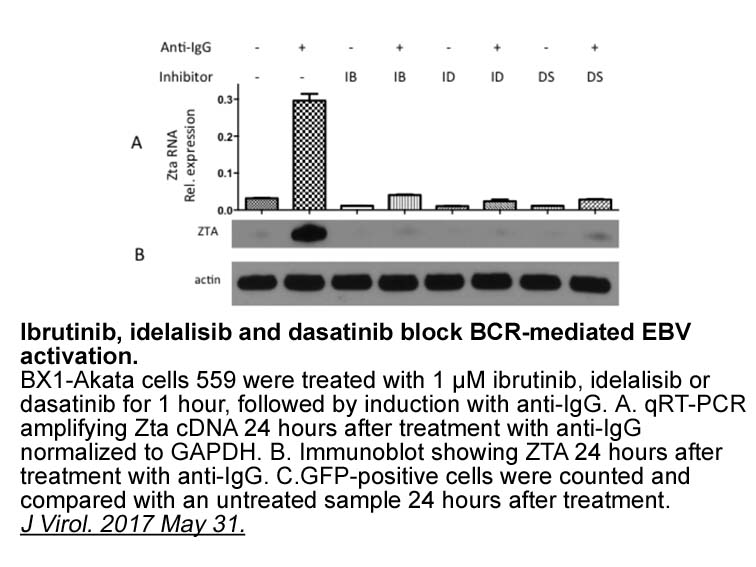
Experiment 4B: CP154,526 during fear acquisition normalizes fear-potentiated startle and prevents exacerbation of contextual conditioned fear in SERT−/− rats. As genotypes differed markedly in basal fear acquisition, drug effects could differ strongly between genotypes. Therefore, all effects in th
-
Employing distinct genetic and pharmacological approaches Di
2020-04-16
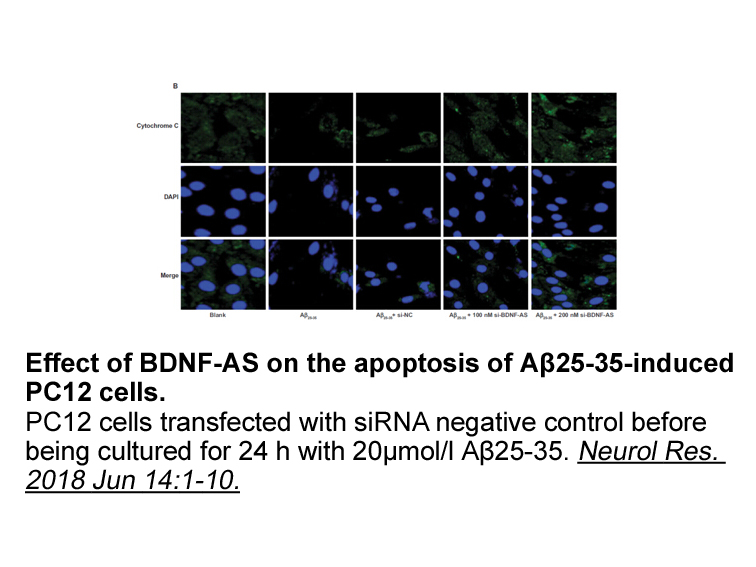
Employing distinct genetic and pharmacological approaches, Divakaruni et al. now demonstrate that macrophages still acquire their IL-4-elicited phenotype in the absence of CPT1a (considered the main isoform in leukocytes) or CPT2, and highlight that the increased LC-FAO in M(IL-4) cells is less cruc
-
Based on the above we hypothesized that
2020-04-16
Based on the above, we hypothesized that a PROTAC strategy would be effective to induce CK2 protein degradation. Herein reported is an approach for the preparation of novel PROTACs via “click reaction” for degradation of CK2 protein (Fig. 2). Importantly, “click reaction” is a very facile, selective
-
The repeat sequence TTAGGG of telomere could be
2020-04-16
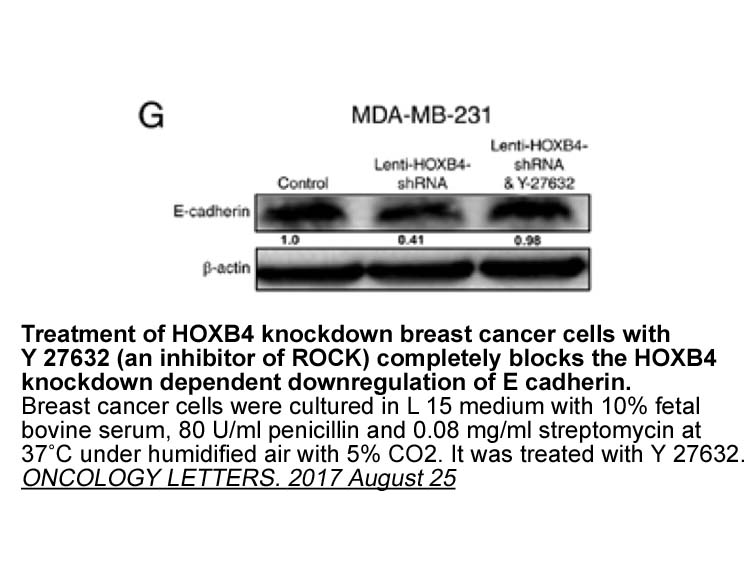
The repeat sequence “TTAGGG” of telomere could be directly recognized by TERF1. TERF1 is indispensable for the maintenance of telomere TAPI-1 structure and integrity (Tan et al., 2017). Trf1 genetic depletion in vivo induces a persistent DNA damage response and telomere uncapping, which effectively
-
Nemadectin mg The swelling independent activation of chlorid
2020-04-16

The swelling-independent activation of chloride channels by glycerol is proved by our further experiments. When glycerol concentration in the isoosmotic solution was reduced to the micromolar scale or even lower concentration, a Cl− current was still induced. The Nemadectin mg were not swollen by t
-
Some mechanistic experiments performed in the early s by
2020-04-16

Some mechanistic experiments performed in the early 2000s by Ongusaha et al. [78], suggest that DDR1 induction protects CFDA SE Cell Tracer Kit receptor from apoptosis in a p53-dependent manner, and that impairment of DDR1 expression or function leads to a pronounced increase of DNA damage-induced
-
Interferon IFN induces formation of
2020-04-16
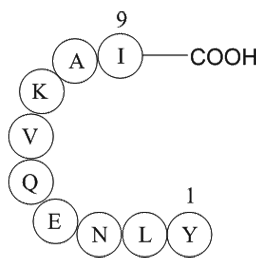
Interferon (IFN)-γ induces formation of a heterotetrameric, IFN-gamma-activated inhibitor of translation (GAIT) complex in human monocytic Ac-DEVD-pNA (Mazumder et al., 2003a, Sampath et al., 2004). The complex binds a bipartite stem-loop element in the 3′UTR of vascular endothelial growth factor (V
16433 records 898/1096 page Previous Next First page 上5页 896897898899900 下5页 Last page